
NVIDIA’s latest message on agentic systems is pretty straightforward: the harder AI agents become to run, the more the hardware, software, and system design have to be built together. If you care about faster responses, lower costs, and fewer brittle AI workflows, this is worth a few minutes of your attention.
In a post on the NVIDIA Technical Blog, the company argues that agentic AI complexity is rising beyond the needs of a single chatbot-style interaction. That matters because the next wave of AI tools is expected to do more than answer prompts—they may plan, reason across steps, use tools, and coordinate with other systems.
Quick Summary
Here’s the plain-English version:
- NVIDIA says AI agents are becoming more complex to build and run.
- As that complexity grows, companies may need tighter coordination between models, software, and AI infrastructure.
- NVIDIA calls this approach extreme co-design—designing the full stack together instead of treating each layer as separate.
- For users, the practical stakes are speed, cost, and reliability.
Why this matters beyond the data center
A lot of AI coverage gets stuck at the model level: how smart it is, how big it is, or what benchmark it scored. But if you’re actually using AI products, what you notice first is usually simpler. Does it respond quickly? Does it fail halfway through a task? Does it become expensive when the workload scales?
That’s the backdrop for NVIDIA’s argument. As agentic systems move from single-turn chat toward multi-step work, the computing demands may become harder to predict and optimize. A system that has to reason, call tools, retrieve information, and possibly coordinate several components is not just “one model answering one question.”
That shift is where NVIDIA positions NVIDIA agentic AI infrastructure as a stack problem, not just a model problem.
What NVIDIA means by “extreme co-design”
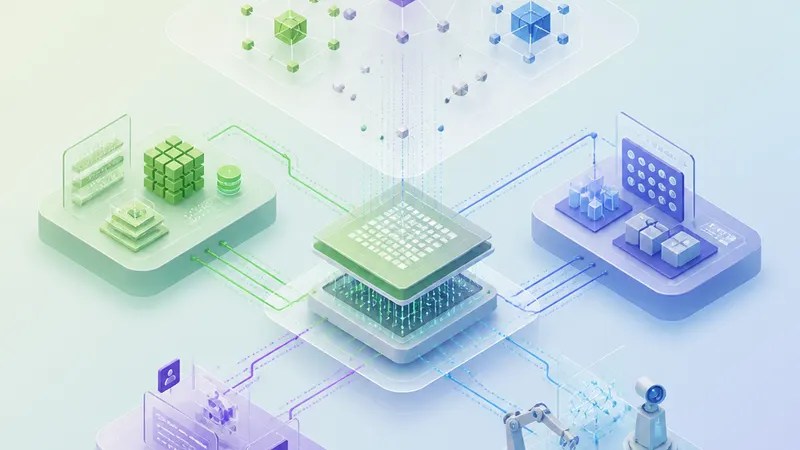
In the NVIDIA blog, the company frames extreme co-design as a deeper form of full-stack optimization. In practice, that means the chips, networking, system architecture, and software are designed with the workload in mind rather than patched together later.
If that sounds abstract, think of it this way: instead of building the brain first and worrying about the body afterward, you design both at the same time.
For AI agents, that matters because the workload can be uneven and complicated. One step may need fast inference, another may need memory movement, another may depend on communication between systems. When those pieces aren’t aligned, performance can slow down and costs can rise.
NVIDIA’s core point is that growing agentic AI complexity makes this kind of tight integration more important.
Why AI agents are harder than chatbots
The blog’s premise lines up with a broader shift in AI products. A chatbot mostly generates an answer. An agentic system may need to break a goal into steps, decide what to do next, use external tools, and keep track of context across a longer task.
That creates more moving parts.
More moving parts usually mean more chances for delay or failure. It also means more strain on AI infrastructure, because the system may need to handle not just model inference but orchestration, memory, retrieval, and communication across components.
So when NVIDIA talks about building for rising complexity, it’s really talking about a future where AI services are less like a single app request and more like a coordinated workflow.
What users should actually take away
You don’t need to be an engineer to care about extreme co-design. The user-facing benefits are pretty familiar.
Speed
If the system stack is tuned for agentic workloads, tasks may complete faster. That doesn’t just mean a quicker first token on screen. It can also mean less waiting between steps in a multi-part task.
Cost
Complex AI workflows can be expensive to run. NVIDIA’s framing suggests that better co-design can improve efficiency, which may help control infrastructure costs. For businesses building AI products, that can affect pricing and whether a feature is practical to offer at scale.
Reliability
This may be the biggest one. Agentic workflows have more places to break than a simple prompt-response setup. A more tightly designed stack may reduce bottlenecks and make systems more dependable when they’re handling longer, more complicated jobs.
The bigger NVIDIA angle
NVIDIA has an obvious interest here: if AI is becoming more infrastructure-heavy, then the company’s pitch for integrated systems gets stronger. The NVIDIA Technical Blog presents that case through the lens of agentic workloads, arguing that future AI performance will depend on how well the entire stack is designed together.
That doesn’t mean every company needs to adopt the same architecture. But it does suggest that in the NVIDIA agentic AI view of the market, the winning products may not be the ones with the most impressive model alone. They may be the ones that can keep complex AI agents fast, affordable, and stable in real-world use.
What to watch next
If you’re tracking agentic systems, the useful question isn’t just “What can the model do?” It’s also “What does the system need to do around the model?”
Expect more discussion across the industry about orchestration, memory, networking, and the practical limits of scaling AI agents. NVIDIA’s point is that those pieces can’t stay separate for long if agentic AI keeps getting more demanding.
For everyday users, the takeaway is simple: the next leap in AI may be less about a flashy demo and more about whether the system underneath can handle real work without slowing down, failing, or costing too much.
FAQs
What are agentic systems in simple terms?
Agentic systems are AI setups designed to do more than answer a single prompt. They may plan steps, use tools, retrieve information, and work through a task over time.
What is extreme co-design?
Based on NVIDIA’s description, extreme co-design means building hardware, software, and system architecture together for the needs of complex AI workloads, instead of optimizing each part separately.
Why should regular users care about AI infrastructure?
Because infrastructure affects the experience you actually get. Better AI infrastructure can mean faster responses, more reliable features, and lower operating costs for the services you use.
Internal link suggestions
- A primer on AI agents and how they differ from chatbots
- An explainer on NVIDIA’s AI hardware and why it matters for model performance
- A piece on the risks of agentic AI, including privacy, errors, and automation limits
 techpost