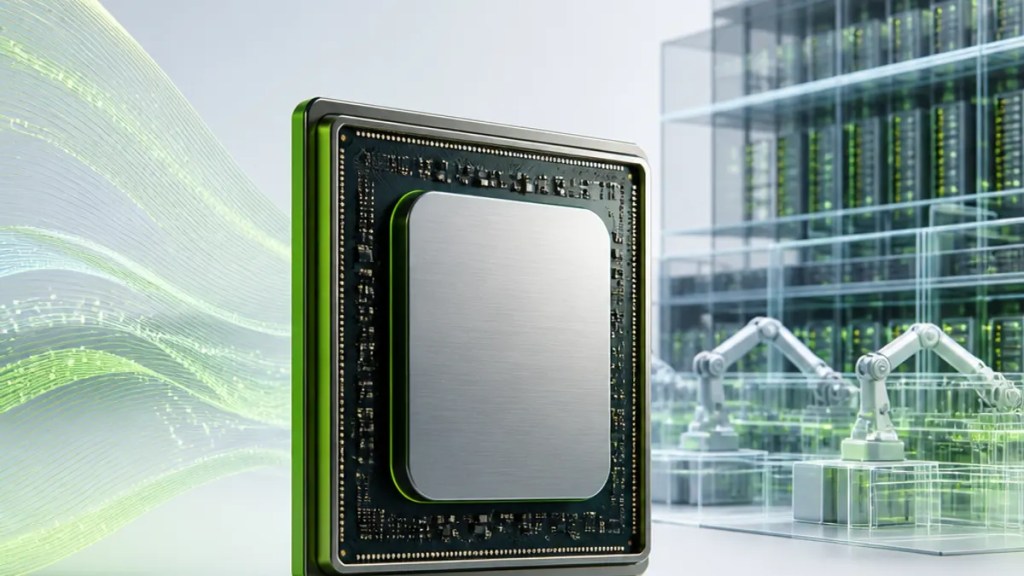
NVIDIA’s next big AI push is not just about GPUs. The new NVIDIA Vera CPU matters because AI systems still need a central processor to move data, coordinate work, and keep huge clusters running efficiently—and that can affect speed, power use, and cost in the data center.
If you don’t spend your day thinking about server chips, here’s the simple version: Vera is aimed at the plumbing behind large-scale AI, the kind NVIDIA often calls AI factories. According to NVIDIA’s developer blog, the company is positioning Vera around three things that operators care about most: performance, bandwidth, and efficiency.
Quick Summary
The NVIDIA Vera CPU is designed for AI factories, which are large-scale AI data centers built to train and run models.
Why it matters:
- AI servers need more than powerful GPUs; they also need a CPU that can feed those GPUs quickly.
- NVIDIA says Vera focuses on high performance, high bandwidth, and better efficiency.
- For companies building AI infrastructure, that could mean smoother AI workload acceleration and better data center efficiency.
- For everyday users, this mostly shows up indirectly: faster AI services, more capable models, and potentially lower operating costs over time.
Why a CPU still matters in AI servers
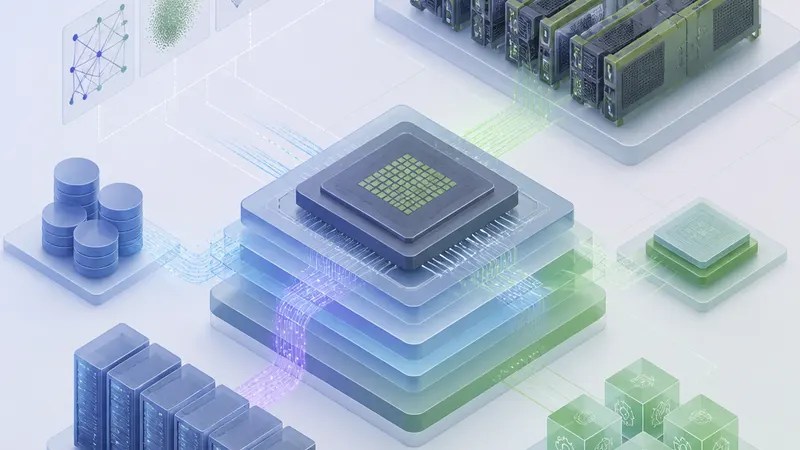
It’s easy to think the GPU does all the heavy lifting in AI. In many cases, it does handle the main math. But the CPU is still the traffic controller.
In an AI server, the CPU manages system tasks, moves data, handles orchestration, and helps keep accelerators busy. If that part of the system becomes a bottleneck, expensive GPUs can end up waiting around. That is exactly why a high-bandwidth CPU matters in modern AI infrastructure.
NVIDIA’s own write-up frames Vera as a CPU built for this environment rather than as a general-purpose desktop-style chip. The emphasis is not just raw speed in isolation. It’s how well the CPU supports AI server performance across an entire platform.
What NVIDIA means by “AI factories”
NVIDIA uses the term AI factories to describe data centers optimized to produce AI outputs at scale—training models, serving inference, and processing large amounts of data continuously.
That wording may sound a little marketing-heavy, but the idea is straightforward. Instead of a conventional data center running a mixed bag of business apps, an AI factory is tuned for AI workload acceleration. That means compute, memory, networking, and software all need to work together with less waste and fewer delays.
In that setup, a stronger NVIDIA CPU is useful if it can keep data flowing to accelerators efficiently and reduce system overhead.
What Vera appears to be trying to fix
The headline from NVIDIA’s developer blog is clear: Vera is about improving performance, bandwidth, and efficiency for AI-focused systems. Those three goals are closely connected.
Performance is obvious—you want faster work completed in the same amount of time.
Bandwidth is about how quickly data can move between parts of the system. In AI, that matters because models and datasets are large, and starving accelerators of data is a real problem.
Efficiency matters because AI infrastructure is expensive to run. Power, cooling, and rack space all add up. A more efficient CPU may help operators get more useful work from the same physical footprint.
That doesn’t mean Vera is only about one chip beating another in a benchmark. The larger point, based on NVIDIA’s positioning, is system-level improvement: better balance across CPU, GPU, and memory so AI factories can operate more smoothly.
Why this matters beyond the data center
Most people will never buy an NVIDIA Vera CPU, and that’s fine. This is data center hardware. But you may still feel the effects.
When cloud providers and large tech companies improve AI infrastructure, they can potentially train models faster, serve more users, and use hardware more efficiently. Over time, that can affect how quickly new AI features arrive and how costly they are to operate.
If you use AI tools for search, coding, image generation, or office work, this kind of back-end hardware matters more than it sounds. Better AI server performance can translate into lower latency, more capacity, or more ambitious models—though those outcomes depend on how companies deploy the hardware.
The bigger NVIDIA strategy
Even with limited details in the provided sources beyond NVIDIA’s own post, the direction is pretty easy to read. NVIDIA is continuing to build not just GPUs, but a fuller AI computing stack.
That matters because AI workload acceleration is no longer about a single component. It’s about tightly linked systems: CPU, GPU, interconnects, memory, and software. Vera appears to fit into that broader strategy by giving NVIDIA a CPU that is more directly aligned with the needs of AI factories.
For buyers of large-scale systems, that can be appealing. Fewer mismatched parts can make it easier to design and optimize a cluster.
What users should take away
The practical takeaway is simple: the NVIDIA Vera CPU is not a mainstream consumer story, but it is an important infrastructure story.
If NVIDIA delivers what it is promising, Vera could help AI factories move data faster, keep accelerators better utilized, and improve data center efficiency. That’s the kind of change that may not be visible on a store shelf, but it can shape the AI services you use every day.
And that’s why this launch is worth paying attention to. In AI, the flashy part is usually the model. The expensive, decisive part is often the system underneath it.
FAQs
What is the NVIDIA Vera CPU in plain English?
It’s a server CPU designed for large AI systems. NVIDIA says it is built to improve performance, bandwidth, and efficiency in AI-focused data centers.
Why does an AI system need a CPU if it already has GPUs?
GPUs handle much of the AI math, but CPUs still manage system tasks and help move data around. If the CPU can’t keep up, the whole server may slow down.
Will regular consumers ever buy Vera?
Probably not in the usual sense. Vera is aimed at AI infrastructure and data centers, so its impact on most people will likely be indirect through the AI services they use.
Sources
Internal link suggestions
- A primer on how CPUs, GPUs, and memory work together in AI servers
- An explainer on what an AI factory is and why tech companies use the term
- A comparison piece on NVIDIA’s AI hardware roadmap, including Grace and Blackwell

