NVIDIA IGX Thor: Which Edge AI Platform to Choose
AI is moving out of the cloud and into real-world places like hospitals, factories, and robots on the move. That matters even if you are not an engineer, because these are the systems that may help inspect products, support medical devices, or guide autonomous machines where split-second decisions matter.
That is where NVIDIA IGX Thor comes in. Based on NVIDIA’s technical blog, it is aimed at edge deployments, meaning AI runs near the machine or device instead of sending everything to a distant data center. For buyers and teams evaluating an edge AI platform, the key question is not just what it is, but when it makes sense compared with other kinds of NVIDIA edge computing hardware.
Quick Summary
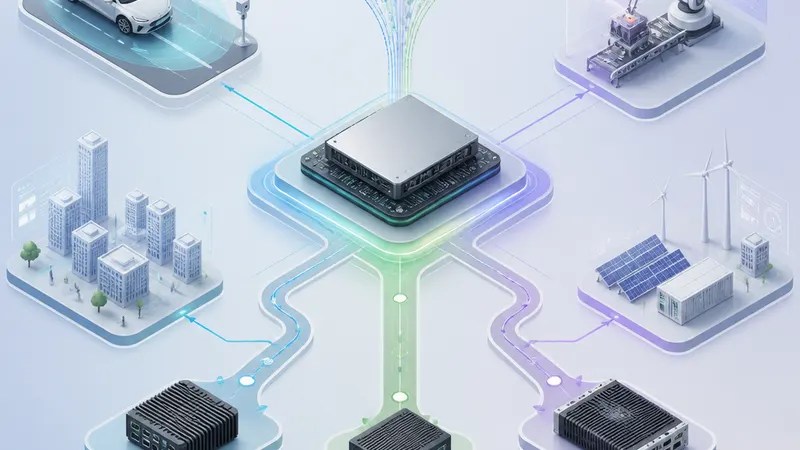
NVIDIA IGX Thor is positioned for edge AI workloads in three demanding areas: industrial AI, medical AI, and robotics AI.
The reason to consider it is simple: some AI jobs need local processing, strong performance, and a platform built for environments where reliability and safety matter.
If your project is in a factory, a healthcare setting, or an autonomous machine, NVIDIA is presenting IGX Thor as a platform designed for those edge use cases.
What NVIDIA IGX Thor is for
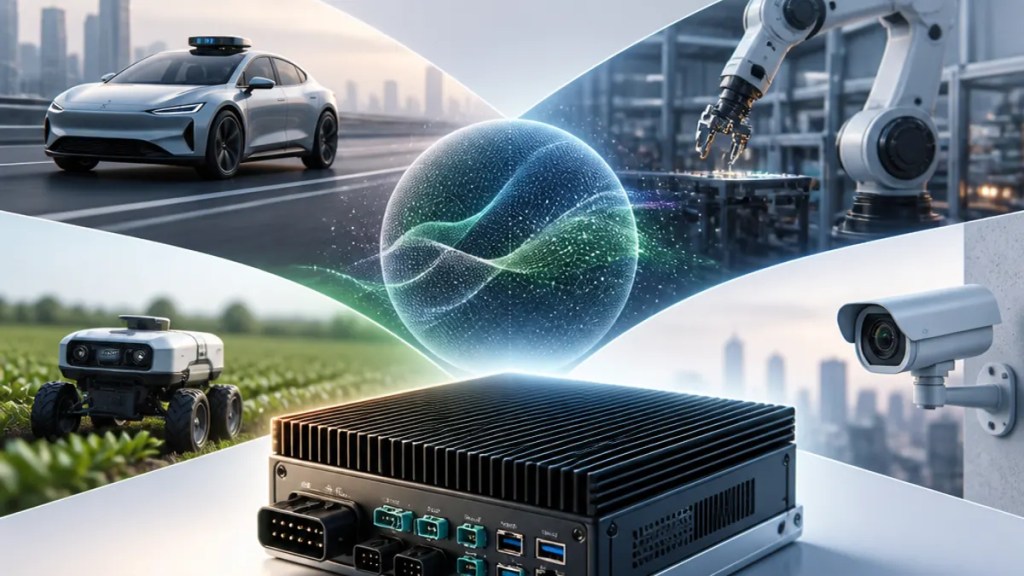
According to NVIDIA’s developer blog, NVIDIA IGX Thor is built to power edge AI applications across industrial, medical, and robotics environments.
In plain language, that means it is meant for places where AI has to work close to the action:
- In factories, for machine vision, automation, or monitoring
- In healthcare settings, for medical systems that may need local AI processing
- In robots, for perception and decision-making on the device itself
This focus matters because edge systems often face different constraints than cloud AI. They may need to respond quickly, keep data local, or continue operating even when internet connectivity is limited.
Why edge AI matters in factories, healthcare, and robotics
AI for factories
For AI for factories, local computing can help machines inspect products, monitor equipment, or support automated operations without relying on a remote server for every decision.
That can be useful in industrial sites where delays are costly or where data stays on-site for operational reasons.
AI for healthcare
For AI for healthcare, edge processing may matter because medical environments often need dependable, on-premises computing. In these settings, AI may be used near devices and workflows where sending sensitive data elsewhere is not always ideal.
NVIDIA’s positioning of IGX Thor for medical AI suggests it is targeting these more controlled, specialized deployments.
Robotics edge AI
For robotics edge AI, local processing is especially important. Robots often need to interpret sensor data and act in real time. If a robot has to wait on a cloud response, that can limit usefulness in dynamic environments.
That is why a platform aimed at robotics AI is different from a general-purpose office PC or standard server.
How to think about choosing the right edge AI platform
Choosing an edge AI platform is less about brand loyalty and more about fit.
Based on the source, NVIDIA IGX Thor is the better match when your project sits in one of these categories:
- Industrial systems
- Medical systems
- Robotics systems
You should lean toward a platform like this if your application needs AI at the edge, close to equipment or users, rather than mostly in the cloud.
You may also want this kind of platform if your workload involves real-world sensing, automation, or device-level intelligence. These are the kinds of use cases NVIDIA highlights for IGX Thor.
On the other hand, if your AI work is mostly experimentation, office analytics, or cloud-hosted software, a specialized edge platform may be more than you need.
Who NVIDIA IGX Thor seems best suited for
The source points to three clear audiences.
Industrial teams
Manufacturers, automation vendors, and companies building inspection or monitoring systems are the most obvious fit. If your focus is industrial AI, NVIDIA IGX Thor appears intended for that category.
Medical device and healthcare developers
Teams working on medical AI systems may also be the target audience. The source does not list every exact device type, so it is safest to say the platform is positioned for medical edge applications rather than any one confirmed product class.
Robotics builders
Developers of autonomous or semi-autonomous machines are another core group. For robotics AI, edge computing is often necessary because robots must sense and react in place.
So, what should you choose and why?
If you are comparing options, the simplest answer is this:
Choose NVIDIA IGX Thor if your AI system must run at the edge in industrial, medical, or robotics settings, and if local performance and deployment near the machine are central requirements.
Choose a less specialized setup if your AI does not need to live on-site, act in real time, or operate inside those demanding environments.
The source does not provide a full side-by-side comparison with other NVIDIA products, so it would be inaccurate to claim exact advantages in performance, pricing, or compatibility beyond NVIDIA’s stated positioning. But the direction is clear: IGX Thor is presented as a purpose-built platform for edge AI in high-stakes, real-world deployments.
FAQs
What is NVIDIA IGX Thor in simple terms?
It is an NVIDIA platform designed to run AI locally, at the edge, for industrial, medical, and robotics applications.
Who should consider NVIDIA IGX Thor?
Teams building AI systems for factories, healthcare environments, or robots should be the main audience, based on NVIDIA’s description.
Why not just run this AI in the cloud?
Some applications need fast local responses, on-site processing, or operation close to machines and devices. That is where an edge AI platform may make more sense.
Sources
- NVIDIA Technical Blog: NVIDIA IGX Thor Powers Industrial, Medical, and Robotics Edge AI Applications
Internal link suggestions
- A beginner’s guide to edge AI and how it differs from cloud AI
- How NVIDIA edge computing is used in robotics and autonomous machines
- AI for healthcare and factories: where local processing makes sense

