

Validate Kubernetes for GPU Infrastructure: What Users Should Know
Running AI services is not just about having powerful chips. It is also about making sure the software stack around those chips works the same way every time. That is why the idea behind Kubernetes for GPU infrastructure matters beyond engineers: if validation is weak, AI apps may be slower to launch, harder to scale, and more expensive to troubleshoot.
NVIDIA’s recent technical blog focuses on a practical answer to that problem: validating GPU-ready Kubernetes environments with layered, reproducible recipes. In simple terms, that means testing a system step by step, using repeatable instructions, so teams can confirm that their GPU infrastructure is actually ready for real AI workload deployment.
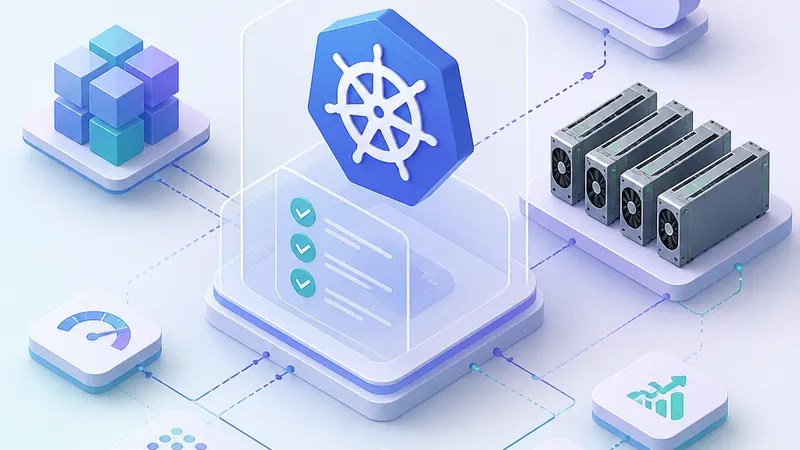
Quick Summary
If you use or plan to use AI tools, there is a hidden layer that affects reliability: the infrastructure underneath.
NVIDIA’s approach highlights two ideas:
- Layered validation means checking one part of the stack at a time, instead of treating the whole system like one black box.
- Reproducible recipes means using the same repeatable setup and test process so results are easier to trust and compare.
For businesses and developers, that may mean fewer deployment mistakes and a smoother path to running GPU-powered applications on Kubernetes.
Why Kubernetes validation matters for GPU infrastructure
Kubernetes is the popular software platform used to manage containers, or packaged applications, across clusters of machines. When GPUs are added, the setup becomes more complex.
A normal app may only need compute, memory, and storage. A GPU-powered app, especially for AI, also depends on drivers, device plugins, scheduling rules, and software layers that can talk correctly to the hardware.
That is where Kubernetes validation becomes important. If one layer is misconfigured, the whole AI workload deployment process may fail or behave unpredictably. For everyday users, that can show up as delayed AI features, unstable services, or higher cloud costs. For IT teams, it means more time spent diagnosing issues that are hard to reproduce.
According to NVIDIA’s blog, the goal is to validate Kubernetes for GPU infrastructure in a way that is structured and repeatable rather than ad hoc.
What “layered, reproducible recipes” means
The key idea in NVIDIA’s post is not just testing, but testing in layers.
A layered approach breaks the environment into smaller parts. Instead of asking, “Does the whole cluster work?” teams can ask more specific questions:
- Is the Kubernetes environment configured correctly?
- Are GPUs visible and usable?
- Do the software components interact properly?
- Can workloads run consistently on top of that stack?
This matters because GPU Kubernetes environments often involve many moving parts. When testing is layered, teams may find problems earlier and isolate the cause faster.
The second idea is reproducibility. A reproducible infrastructure testing method uses recipes, or documented procedures, that can be run again in the same way. That helps reduce guesswork. It also makes it easier to compare environments, verify fixes, and share working setups across teams.
In practice, this may help organizations avoid the common problem of “it worked once, but we can’t explain why.”
Why this approach matters for AI workload deployment
AI systems are sensitive to infrastructure quality. Training and inference, which means generating results from an AI model, often depend on GPUs being scheduled and used correctly.
If the Kubernetes layer is not validated well, teams may run into issues such as:
- workloads not landing on GPU-enabled nodes,
- mismatches between software and hardware support,
- inconsistent performance,
- repeated setup errors across environments.
NVIDIA’s framing suggests that NVIDIA Kubernetes recipes are meant to bring more order to that process. For teams deploying AI applications, a recipe-based method can make testing less improvised and more systematic.
That matters whether a company is building internal AI tools, customer-facing AI features, or shared infrastructure for multiple teams.
What general readers should take away
You do not need to be a cluster administrator to understand the value here.
The broader message is simple: powerful AI hardware is not enough on its own. Reliable AI services depend on reliable infrastructure testing.
For companies investing in GPU infrastructure, validation may help reduce wasted time and lower the risk of rollout problems. For developers, it can make environments easier to repeat and debug. For end users, it may lead to more dependable AI features behind the scenes.
The NVIDIA blog centers on a technical audience, but the takeaway is broader. As more organizations move AI services into production, the quality of the deployment process matters almost as much as the model itself.
A practical shift from one-off setup to repeatable operations
One reason this topic stands out is that it reflects a shift in how infrastructure is managed.
Older approaches often relied on manual setup, tribal knowledge, or one-time fixes. A recipe-driven model aims to turn those steps into something documented and repeatable. That is especially useful in GPU Kubernetes environments, where small differences between systems can cause large operational headaches.
In other words, validation is not just a final check. It becomes part of how teams build confidence in their platform before important AI workloads go live.
FAQs
What is Kubernetes for GPU infrastructure?
It means using Kubernetes, a system for managing containerized apps, in environments where workloads need GPUs for tasks like AI processing. It adds extra complexity because the software must correctly recognize and use the GPU hardware.
Why is reproducible infrastructure testing important?
Because repeatable tests are easier to trust. If a team can run the same recipe again and get the same result, it becomes easier to confirm that a setup works, compare systems, and troubleshoot problems.
Does this only matter for large AI companies?
No. Any organization using GPUs for AI workload deployment may benefit from better validation. Even smaller teams can run into setup issues if their Kubernetes and GPU layers are not aligned.
Sources
- NVIDIA Technical Blog: Validate Kubernetes for GPU Infrastructure with Layered, Reproducible Recipes
Internal link suggestions
- A beginner’s guide to Kubernetes for AI applications
- How GPU infrastructure affects AI performance and cost
- What to check before deploying AI workloads in production

