Meta description: Learn how NVIDIA Run:ai and NIM help teams use GPUs more efficiently, cut costs, and speed up AI apps.
When companies build AI tools, one practical problem shows up fast: expensive GPUs often sit idle, while other teams are waiting for access. That matters not just to engineers, but to anyone using AI-powered products, because poor hardware use can slow down launches, raise costs, and limit how many people a service can support.
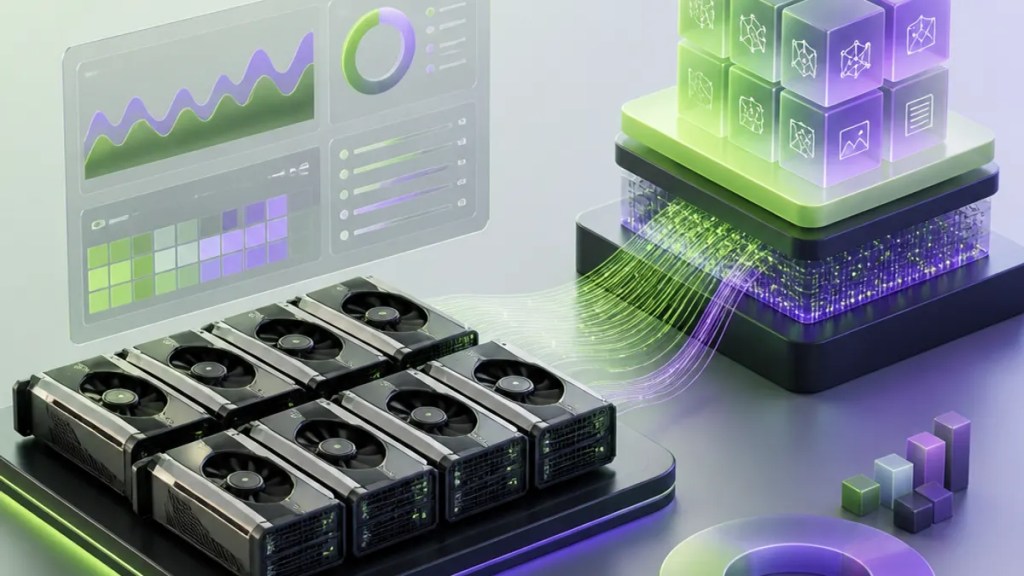
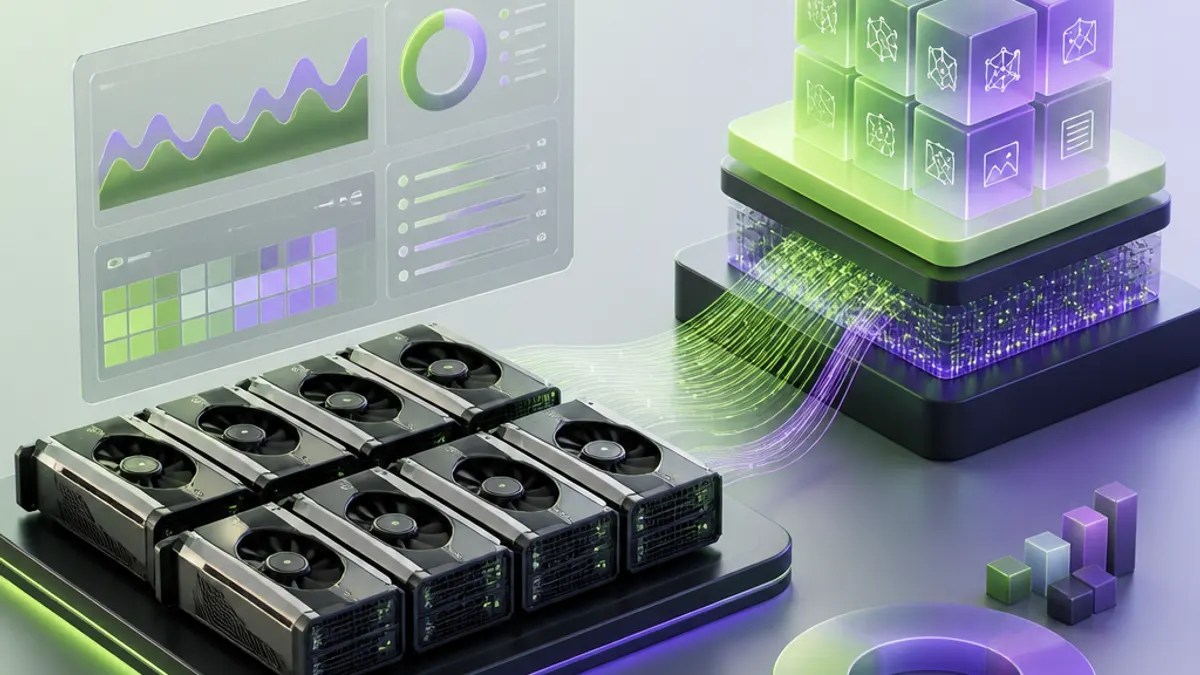
That is where NVIDIA Run:ai and NIM come in. Based on NVIDIA’s technical blog, the pairing is positioned as a way to improve GPU utilization—in simple terms, getting more useful work out of the graphics processors that power modern AI.
Quick Summary
- NVIDIA Run:ai is focused on managing and scheduling GPU resources across teams and workloads.
- NVIDIA NIM is aimed at serving AI models, meaning packaging and running models so apps can use them more easily.
- Together, they are presented by NVIDIA as a way to reduce wasted GPU time, improve sharing, and support faster AI model deployment.
- For users and businesses, the big takeaway is straightforward: better GPU cost optimization may help AI services run more efficiently.

What NVIDIA Run:ai and NIM do
NVIDIA’s blog describes a combined approach.
NVIDIA Run:ai handles GPU scheduling, which means deciding who gets access to GPU resources, when, and how much. In a shared environment, that can help prevent one project from monopolizing hardware while other jobs wait.
NVIDIA NIM, short for NVIDIA Inference Microservices in NVIDIA’s broader platform language, is used for model serving. Model serving means taking a trained AI model and making it available for real applications, such as chatbots, search tools, assistants, or image features.
Put simply:
- Run:ai helps organize the GPU pool.
- NIM helps put AI models into use.
That combination matters because AI teams usually need both. It is not enough to have powerful hardware if it is poorly assigned. And it is not enough to have a model ready if deployment is slow or difficult.
Why GPU utilization matters
A GPU is a chip designed for parallel computing, which is especially useful for AI training and inference, the process of generating outputs from a model. These chips are powerful, but they are also limited resources in many organizations.
If GPUs are underused, companies may end up paying for hardware capacity that is not doing much work. If they are oversubscribed, teams may face delays. NVIDIA’s framing suggests that better coordination between infrastructure management and model serving can help address both problems.
For everyday readers, the impact is indirect but real:
- AI features may reach products faster.
- Services may scale more smoothly.
- Companies may avoid some unnecessary infrastructure spending.
How the two tools work together
The NVIDIA Technical Blog focuses on maximizing usage across shared AI infrastructure.
In practical terms, Run:ai appears to sit at the resource-management layer. It helps allocate GPU access across different users, teams, and jobs. That is important in environments where many workloads compete for the same hardware.
NIM, by contrast, sits closer to the application layer. It helps teams deploy models as services that applications can call.
The value of combining them is fairly intuitive:
- A company has a pool of GPUs.
- Run:ai helps assign those GPUs efficiently.
- NIM helps run AI models on that infrastructure.
- The result may be higher utilization and less waste.
NVIDIA’s message is that this pairing can support more efficient AI operations from infrastructure through deployment.
What users should know before adopting this approach
For non-specialists, the key point is that these tools are about operations, not just raw AI performance.
That means NVIDIA Run:ai is most relevant when organizations have multiple teams, shared clusters, or competing workloads. If only one small project uses a few GPUs, advanced scheduling may matter less.
NVIDIA NIM becomes important when teams want a cleaner path to AI model deployment. Instead of treating every model rollout as a custom engineering project, a serving layer may help standardize how models are delivered to apps.
Together, they suggest a broader trend in enterprise AI: companies are paying more attention not just to building models, but to running them efficiently.
The business angle: costs, speed, and access
The strongest user-facing benefit in NVIDIA’s explanation is better use of expensive hardware.
That connects directly to GPU cost optimization. If a company can keep more GPUs busy with useful work, it may get more value from the systems it already owns or rents. Better scheduling can also improve fairness, so teams spend less time waiting for access.
There is also a speed benefit. If model serving is streamlined with NVIDIA NIM, and hardware access is managed with Run:ai, deployment pipelines may become less cumbersome.
In short, this is about making AI infrastructure more practical to operate at scale.
What this means for the broader AI market
NVIDIA’s post reflects a larger industry shift. As AI adoption grows, the challenge is no longer only training bigger models. It is also about making sure those models run efficiently in production, the live environment where users actually interact with them.
That is why GPU utilization, GPU scheduling, and model serving are becoming central topics. Businesses want AI systems that are not just capable, but manageable.
For readers watching the AI space, NVIDIA Run:ai and NIM are best understood as infrastructure tools designed to help organizations get more out of scarce GPU resources while moving models into real-world use.
FAQs
What is the difference between NVIDIA Run:ai and NVIDIA NIM?
NVIDIA Run:ai is focused on managing and scheduling GPU resources. NVIDIA NIM is focused on serving AI models so applications can use them.
Why should non-engineers care about GPU utilization?
Because inefficient GPU use can raise costs and slow down AI product rollouts. Better utilization may help companies deliver AI features faster and more efficiently.
Does this help with AI model deployment?
Yes. NVIDIA presents NIM as a way to support model serving, which is a key part of AI model deployment, while Run:ai helps make sure the needed GPU resources are available.
Sources
Internal link suggestions
- A beginner’s guide to GPU utilization in AI workloads
- What AI model deployment means in plain English
- How AI infrastructure choices affect app speed and cost

