Meta description: A beginner guide to NVIDIA Nemotron 3 agents for reasoning, multimodal RAG, voice, and safety—and what they mean for everyday AI use.
Nemotron 3 Agents: What Beginners Need to Know
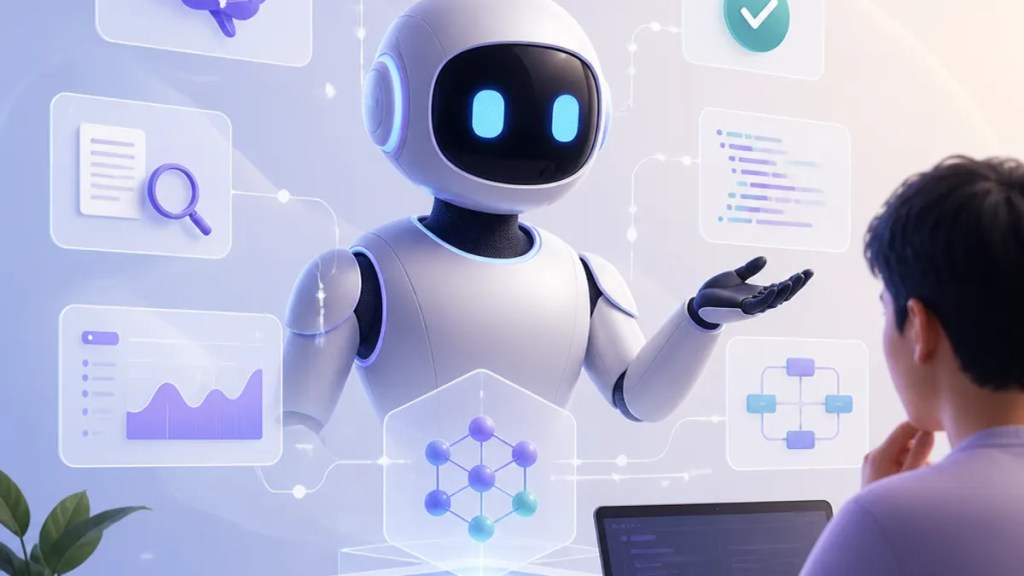
If you use AI tools for search, customer support, note-taking, or voice assistants, NVIDIA’s latest work matters because it points to where everyday AI is heading: systems that can do more than chat. The company’s developer blog lays out how Nemotron 3 agents are being built to handle reasoning, multimodal RAG, voice, and safety in one broader setup.
That sounds technical, but the idea is simple. Instead of a model that only answers from its training data, an AI agent can pull in outside information, work across text and images, talk and listen, and apply guardrails before responding. In practice, that could mean more useful assistants—and, ideally, fewer risky or off-base answers.
Quick Summary
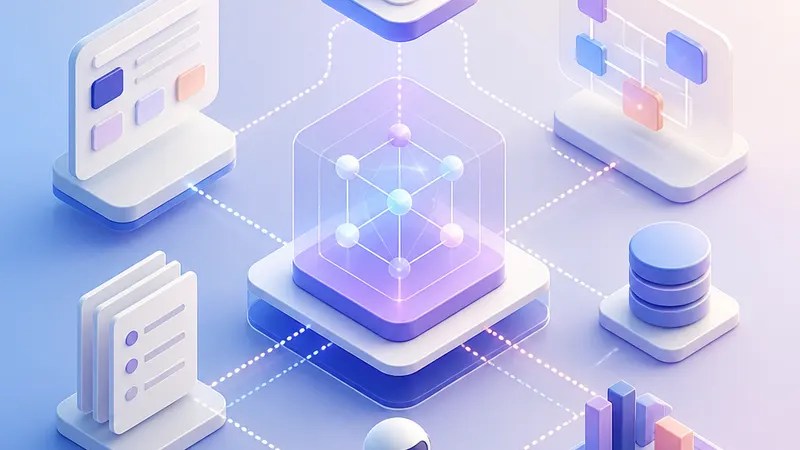
NVIDIA’s post describes Nemotron 3 agents as part of a toolkit for building AI systems that can:
- reason through tasks step by step,
- use multimodal RAG, meaning retrieval-augmented generation that works with more than just text,
- support voice input and output,
- and add safety checks around what the system says or does.
For beginners, the big takeaway is that this is less about one chatbot and more about how future AI apps may be assembled from several connected parts.
What NVIDIA is actually building
According to NVIDIA’s developer blog, the focus is on agents built with the Nemotron 3 family for several practical jobs at once.
First is reasoning. In plain English, that means the system is designed to work through a problem rather than just produce a quick answer. For users, that could matter in tasks where the AI needs to follow instructions, combine evidence, or complete multiple steps.
Second is multimodal RAG. RAG stands for retrieval-augmented generation, a method where an AI fetches relevant information from outside sources before answering. “Multimodal” means those sources may include different kinds of data, such as text and images, not just documents full of words.
Third is voice. That points to agent experiences where speaking and listening are part of the workflow, rather than an add-on. If you’ve ever wished an AI assistant felt less like a search box and more like a conversation, this is the direction.
Fourth is safety. In this context, safety means controls that help reduce harmful, inappropriate, or unreliable outputs. That does not mean perfect protection, but it does show that guardrails are being treated as part of the system design, not a final patch.
Why this matters beyond developers
For a general reader, the significance is not that NVIDIA published another technical post. It’s that the company is describing AI as a stack of capabilities working together.
That matters because many people now meet AI through fragmented tools: one app for chat, another for image search, another for voice transcription, another for policy filtering. The Nemotron 3 approach suggests those pieces may increasingly be bundled into one agent pipeline.
And that changes what “AI assistant” means. It may no longer be enough for a model to sound fluent. Users may expect it to fetch current information, understand visual context, respond by voice, and avoid obvious unsafe behavior. Fair expectation, right?
A beginner’s guide to the jargon
Reasoning
This refers to how an AI handles multi-step problems. Instead of jumping to an answer, it may be set up to process a task in stages.
RAG
Retrieval-augmented generation is when the model looks up information from a connected source before replying. This can help ground answers in actual reference material.
Multimodal
Multimodal means the system can work with more than one type of input or output, such as text, images, and audio.
Agent
An agent is an AI system that does more than generate text. It can use tools, retrieve information, follow workflows, and make decisions within set limits.
Safety
Safety covers filters, checks, and policies meant to reduce harmful outputs or misuse.
What beginners should keep in mind
The first thing to know is that these systems are not just “smarter chatbots.” They are combinations of models, retrieval systems, voice components, and safety layers.
The second is that more capability also means more moving parts. A response may depend on what information was retrieved, how the model interpreted an image, how voice was transcribed, and what safety rules were applied.
The third is that safety is being treated as a design requirement. NVIDIA’s write-up puts safety alongside reasoning, RAG, and voice, which is notable. It suggests that useful AI is not only about performance, but also about control.
Still, beginners should avoid assuming that “safety” means solved. The source describes a build approach, not a guarantee that every output will be correct or risk-free.
What this may mean for everyday AI use
If this style of agent building spreads, users may see AI tools that feel more practical and less isolated.
A customer support bot may pull answers from current documentation instead of guessing. A study assistant may combine text and images from source material. A voice assistant may handle spoken requests while checking retrieved information before answering. And safety systems may screen responses before they reach you.
That does not automatically make every AI app better. But it does show where the industry is trying to improve the experience: less pure text generation, more grounded, multimodal, and controlled behavior.
Sources
FAQs
1. What is Nemotron 3 in simple terms?
Based on NVIDIA’s developer post, Nemotron 3 is part of the company’s AI model and agent-building work. In this context, it is being used to build agents for reasoning, multimodal retrieval, voice, and safety-related functions.
2. What does multimodal RAG mean for regular users?
It means an AI system may be able to pull in relevant outside information from more than one type of source, such as text and images, before answering. For users, that could make responses more grounded and context-aware.
3. Does this mean AI assistants will become safer?
NVIDIA’s post shows safety as a core part of the design. That may improve how AI systems are controlled, but it does not confirm that all outputs will be fully safe or always correct.
Internal link suggestions
- Beginner’s guide to retrieval-augmented generation (RAG)
- What AI agents are and how they differ from chatbots
- How voice AI works: speech recognition, synthesis, and safety

