GPU Fractioning in NVIDIA Run:ai Explained
Meta description: Learn what GPU fractioning in NVIDIA Run:ai means, how it boosts token throughput, and what AI users should know.
NVIDIA is positioning GPU fractioning in NVIDIA Run:ai as a practical way to improve how AI teams use expensive accelerator capacity, especially for inference workloads that do not fully consume an entire GPU.
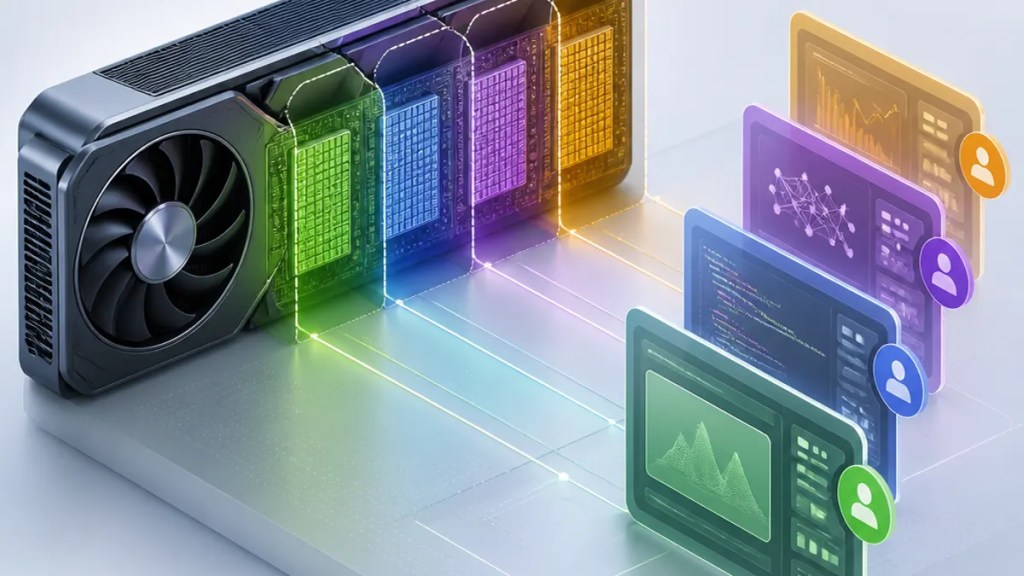
Based on NVIDIA’s technical blog, the core idea is straightforward: instead of assigning one full GPU to one workload, Run:ai can divide GPU resources into smaller portions so multiple jobs can share the same device. For users focused on token throughput, GPU utilization, and AI workload optimization, that matters because many inference tasks leave GPU capacity idle.
Quick Summary
- GPU fractioning in NVIDIA Run:ai lets multiple AI workloads share a single GPU.
- NVIDIA says this can increase token throughput by putting unused GPU capacity to work.
- The approach is especially relevant for LLM inference performance when a single model instance does not saturate the hardware.
- For users, the main benefits are better GPU utilization, more efficient AI infrastructure, and potentially lower waste in shared clusters.
What GPU fractioning in NVIDIA Run:ai means
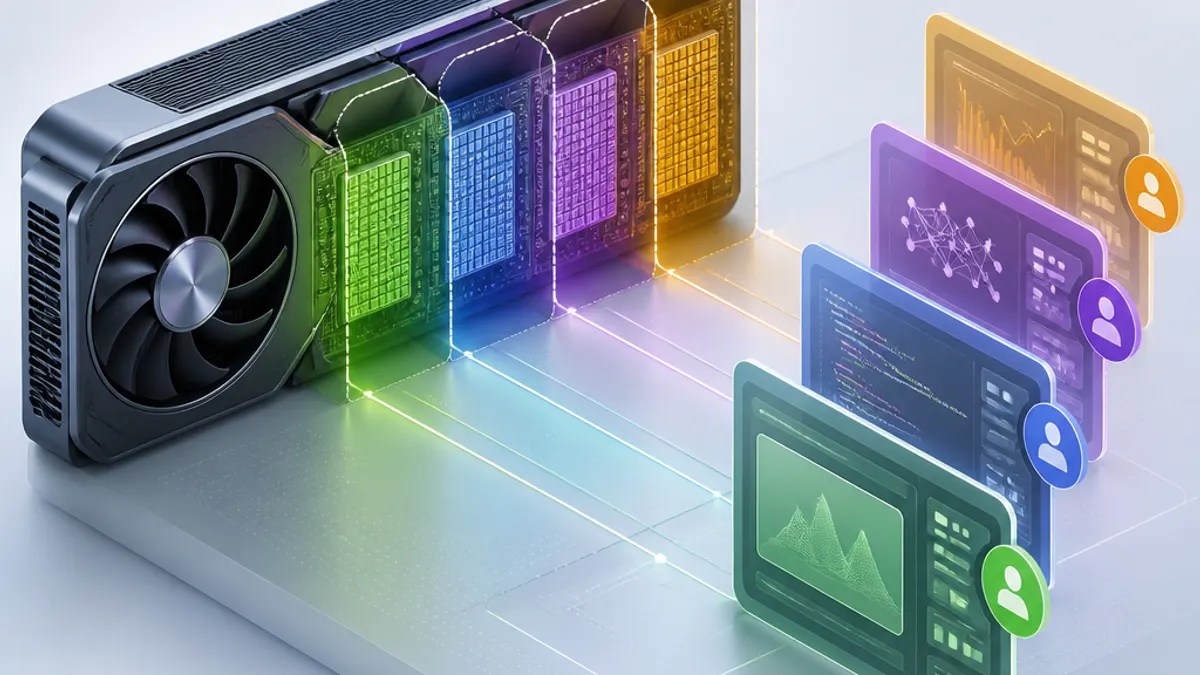
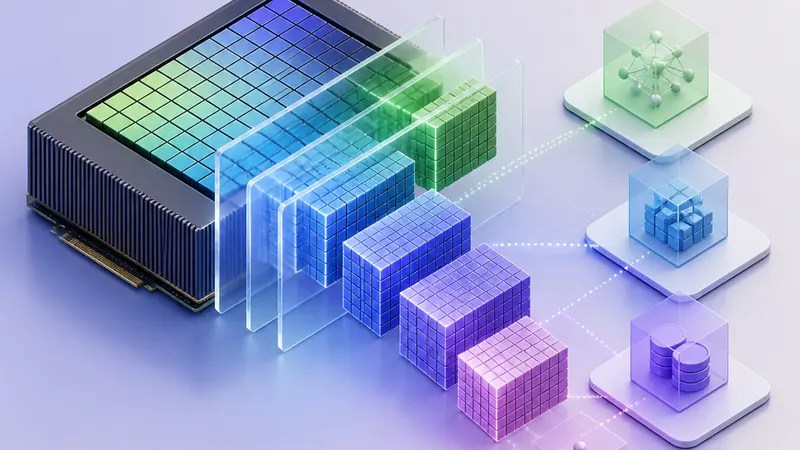
NVIDIA describes GPU fractioning in Run:ai as a way to split GPU capacity across multiple workloads rather than reserving the whole device for one job.
That matters in modern AI environments because not every inference task needs a full GPU all the time. Some workloads are bottlenecked by model size, request patterns, or memory behavior rather than raw compute. In those cases, dedicating an entire GPU can leave meaningful headroom unused.
With NVIDIA Run:ai, the platform is meant to help orchestrate and schedule those shared resources. In practical terms, GPU sharing can allow teams to place several inference services or jobs on the same accelerator, as long as the workloads fit within the available resources.
Source: NVIDIA Technical Blog
Why token throughput is the key metric
The NVIDIA post frames the benefit around token throughput, which is a useful lens for generative AI inference. For many organizations, the question is not simply whether a model runs, but how many tokens the system can serve over time with the hardware already deployed.
If a single inference service is underusing a GPU, fractioning may improve overall output by letting additional workloads consume the unused capacity. That does not necessarily mean every individual request becomes faster. Instead, the value may come from raising total productive work per GPU.
This is an important distinction for buyers and platform teams evaluating LLM inference performance. Higher aggregate throughput can be more valuable than dedicating isolated hardware to lightly loaded services.
Why this matters for AI infrastructure teams
For operators managing shared clusters, AI infrastructure efficiency often comes down to avoiding stranded resources.
A full-GPU allocation model is simple, but it can be wasteful when workloads are bursty or small. NVIDIA’s framing suggests that fractioning is designed to help teams match resource allocation more closely to actual demand.
That can support several goals:
- Better GPU utilization
- More flexible scheduling for mixed inference jobs
- Improved capacity planning in shared environments
- More efficient use of limited accelerator inventory
In other words, GPU fractioning is less about adding new hardware and more about extracting more useful work from what is already installed.
Where GPU sharing may help most
The NVIDIA blog specifically ties the concept to inference and token generation. That suggests the clearest fit may be environments where:
- Multiple inference endpoints run at the same time
- Some services have variable or low utilization
- Teams need to serve more workloads without assigning one GPU per model
- Cluster operators want tighter control over resource allocation
This makes GPU sharing especially relevant for organizations running many models, internal AI services, or multi-tenant platforms.
It may be less about replacing every dedicated deployment and more about identifying workloads that do not need exclusive access to a full accelerator.
What users should know before adopting it
The biggest takeaway is that GPU fractioning in NVIDIA Run:ai is an efficiency strategy.
Users should not assume that “more sharing” automatically improves every metric. The NVIDIA post emphasizes throughput, which points to better aggregate output and stronger resource use. For teams evaluating the feature, the real question is whether their workloads are currently underutilizing GPUs enough for fractioning to help.
A few practical considerations follow from that:
Measure current GPU utilization first
If workloads already keep GPUs busy, fractioning may offer less upside. If utilization is low, the opportunity may be larger.
Focus on throughput, not just latency
For inference platforms, total tokens served can be more important than giving every service a dedicated device.
Match the approach to workload type
The NVIDIA discussion centers on inference. Teams should evaluate whether their model serving patterns fit a shared-resource setup.
Treat it as an orchestration and scheduling decision
This is not only a hardware topic. It is also about how NVIDIA Run:ai manages placement and allocation across a cluster.
The broader takeaway
The significance of GPU fractioning in NVIDIA Run:ai is not that it changes what GPUs are, but how organizations may use them.
As AI demand grows, many teams are under pressure to improve AI workload optimization without simply scaling hardware one-for-one. NVIDIA’s message is that fractioning can help unlock unused capacity and increase token throughput for inference-heavy environments.
For users, the practical lesson is clear: if your inference jobs are not filling a GPU, sharing that GPU more intelligently may be one of the simplest ways to improve efficiency.
FAQs
What is GPU fractioning in NVIDIA Run:ai?
It is a way to divide GPU resources so multiple workloads can share a single GPU instead of reserving the whole device for one job. NVIDIA presents it as a method to improve utilization for inference workloads.
How does GPU fractioning affect token throughput?
According to NVIDIA’s technical blog, fractioning can improve total token throughput by putting idle GPU capacity to work. The benefit is mainly about higher aggregate output from the same hardware.
Is GPU fractioning mainly for training or inference?
The source specifically discusses unlocking token throughput for inference-style AI workloads. Based on that framing, the clearest use case appears to be model serving and LLM inference environments.
Sources
- NVIDIA Technical Blog: Unlock Massive Token Throughput with GPU Fractioning in NVIDIA Run:ai
Internal link suggestions
- A guide to improving GPU utilization in shared AI clusters
- An explainer on LLM inference performance metrics
- A primer on AI infrastructure planning for multi-tenant model serving
 techpost