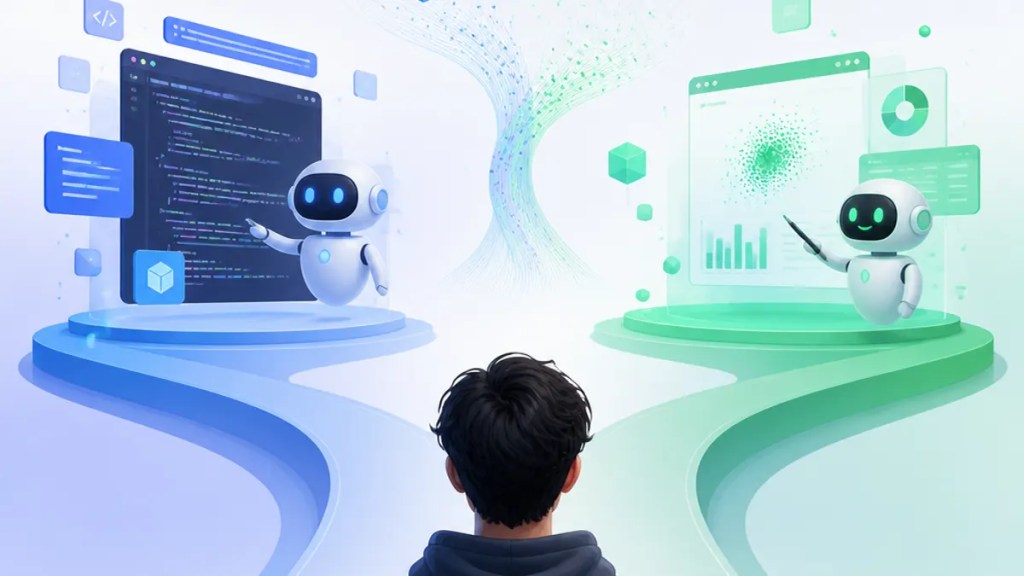
Google and Kaggle’s AI Agents Vibe Coding Course: Which Track Fits You?
If you’ve been meaning to learn AI without signing up for something that feels like a semester-long commitment, this one is worth a look. The new Google and Kaggle vibe coding course is positioned as an AI-focused learning option with different tracks, and the practical question is simple: which path makes sense for your time, skill level, and goals?
Google announced the new AI Agents Vibe Coding Course through The Keyword, tying it to the broader Kaggle GenAI Intensive. Even from that limited official detail, the pitch is clear: this is an AI Agents course aimed at people who want hands-on exposure to building with generative AI, not just reading theory.
Quick Summary
Here’s the plain-English version:
- Google and Kaggle have introduced a new AI Agents course as part of the Kaggle GenAI Intensive.
- It focuses on “vibe coding,” which generally means building quickly and experimentally, often with AI helping you write or shape code.
- The right track depends less on hype and more on what you want: a gentle introduction, practical AI agents training, or a broader generative AI course experience.
- If you’re new, choose the simpler path. If you already code, the more agent-focused route may be a better fit.

What this course appears to be
Based on Google’s announcement, the course sits inside the Google-and-Kaggle learning ecosystem and centers on AI agents. In everyday terms, AI agents are software systems that can take actions toward a goal, rather than only answering a single prompt like a chatbot.
That distinction matters. A chatbot usually responds and stops. An agent may plan, call tools, and work through steps. So if you’re looking for a Google AI course that gets closer to real workflows people talk about now, this topic makes sense.
The “vibe coding” label also tells you something about the learning style. It suggests a more exploratory, build-as-you-go approach instead of a dense, academic one. For many learners, that’s a plus. You get momentum faster.
Which track fits you?
Google’s post points to different tracks, but the source material provided here does not spell out a full official breakdown. So the safest way to think about your choice is by intent.
Choose the beginner-friendly track if you want confidence first
If you’re curious about AI but still shaky on coding, start with the path that feels lighter and more guided.
This is probably the right fit if:
- you want to understand what AI agents do before building complex projects
- you prefer structured exercises over open-ended tinkering
- you’re using the course as an entry point into a broader generative AI course journey
For this group, the biggest win is reducing friction. You don’t need the most advanced material on day one. You need a course that gets you from “I’ve heard of this” to “I can follow what’s happening.”
Choose the more technical track if you want to build sooner
If you already write code, even casually, the more hands-on agent path may be the better use of your time.
This is likely a better fit if:
- you want practical AI agents training
- you’re comfortable debugging and experimenting
- you learn best by making things, breaking them, and trying again
That’s where the idea of vibe coding lands best. It’s less about memorizing concepts and more about using AI-assisted development to move quickly from idea to prototype.
Choose based on time, not just ambition
A lot of people pick the “advanced” option because it sounds more impressive. That’s usually the wrong move.
If you only have short windows during the week, the better track is the one you’ll actually finish. A compact, approachable Google and Kaggle vibe coding course experience is more useful than an ambitious one you abandon halfway through.
Why Google and Kaggle together makes sense
This pairing is part of the appeal. Google brings the AI platform and developer-tool angle. Kaggle has long been associated with practical learning and community-based experimentation.
That combination suggests a course designed to feel applied, not abstract. For readers who don’t live in developer forums all day, that’s important. A lot of AI education still sounds like it was written for people already inside the industry. Kaggle tends to lower that barrier.
Who should actually sign up?
This course may be a good fit if you’re in one of these groups:
- a beginner trying to understand what AI agents are
- a developer looking for a focused Google AI course
- a career switcher exploring a first serious generative AI course
- a Kaggle user who wants a more current AI topic to work on
If you want deep academic coverage or a credential-heavy program, this may not be the first thing to choose based on the source available. But if your goal is practical exposure to agents and modern AI workflows, it looks aligned with that.
The simplest way to decide
Ask yourself one question: do you want understanding, or do you want momentum?
If you want understanding, start with the gentler track.
If you want momentum, and you already know enough code to stay afloat, go with the more build-oriented one.
That’s really the decision. Not which track sounds smartest, but which one gets you moving.
FAQs
What is the Google and Kaggle vibe coding course?
It’s a new course announced by Google in partnership with Kaggle, focused on AI agents and tied to the Kaggle GenAI Intensive. You can see the official announcement on Google’s blog.
Is this course for beginners?
It appears to include different tracks, which suggests some flexibility for different skill levels. If you’re new, the safer choice is the more guided path rather than the most technical one.
What does “vibe coding” mean here?
In this context, it points to a more experimental, fast-moving way of building with AI assistance rather than a purely lecture-based format. The official announcement uses the term, but the exact structure may depend on the track you choose.
Sources
- Google, The Keyword: Join the new AI Agents Vibe Coding Course from Google and Kaggle
Internal link suggestions
- A beginner-friendly explainer on what AI agents are and how they differ from chatbots
- A guide to Google’s latest AI developer tools and learning resources
- A comparison of popular generative AI courses for beginners and career switchers

