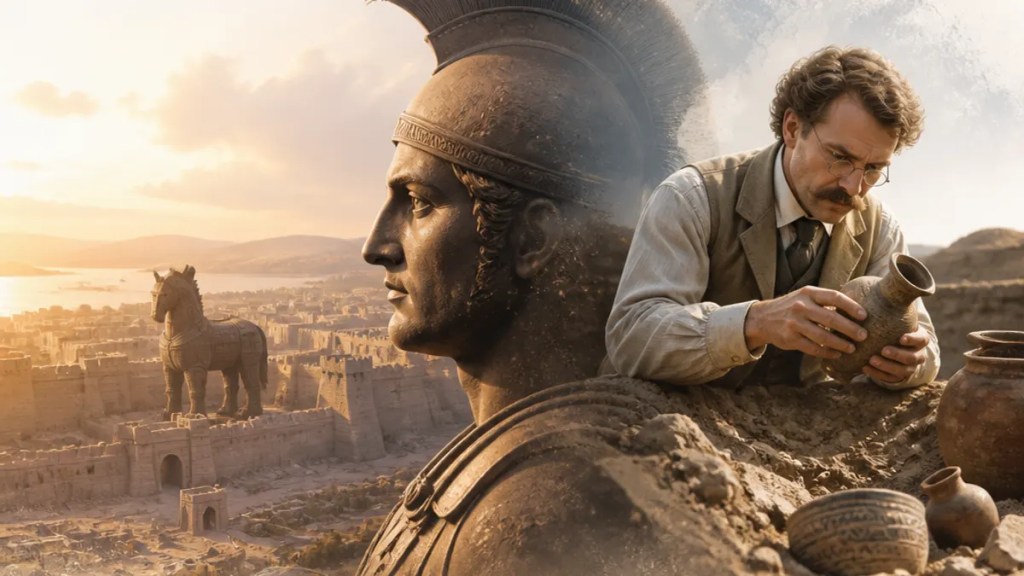
Troy Was Real — and Schliemann’s Find Changed the Story
If you’ve ever wondered was Troy real, the short answer is yes — but the longer answer is where things get interesting. The city behind the legend appears to have been real, and the archaeology around it helped move Troy from pure epic poetry into the world of physical evidence.
What makes this worth your attention is that the discovery story is messy. According to Storica, the man most associated with finding Troy, Heinrich Schliemann, also damaged parts of the site while digging for it. So the answer to “was Troy real” is not just about proving a place existed. It’s also about how archaeology can uncover history while accidentally erasing some of it.
Quick Summary
Here’s the plain-English version:
- The ancient Troy site is real.
- Heinrich Schliemann is widely linked to finding it in the 19th century.
- His work helped convince people that Troy was not only myth.
- But his digging methods were destructive, according to Storica.
- That means the story of Troy archaeology is both a discovery story and a cautionary one.
Why Troy still matters
For most people, Troy starts as a story: heroes, war, a wooden horse, and a city that feels half-real even if you read it in school as literature. That’s why the real-world site matters. It gives the Troy myth and history debate something solid to stand on.
The key point is simple: a legendary story can be connected to a real place without every detail in the legend being proven. That distinction matters if you’re trying to make sense of headlines or social posts that flatten everything into “true” or “false.”
What Schliemann actually changed
Schliemann’s name comes up constantly in any discussion of Troy excavation, and for good reason. As Storica explains, he is associated with uncovering Troy and with finding a hoard of gold in 1873.
That discovery helped reshape public understanding of Troy. Instead of being treated only as a poetic setting, Troy became harder to dismiss as pure invention. In practical terms, Schliemann changed the conversation: he gave people archaeological material to connect with the old stories.
But there’s a catch, and it’s a big one.
Storica’s account makes clear that Schliemann’s approach caused damage to the site. In other words, he may have helped prove Troy’s reality while also destroying parts of the evidence archaeologists would most want to study today. That tension is the real heart of the story.
The messy part of Troy archaeology
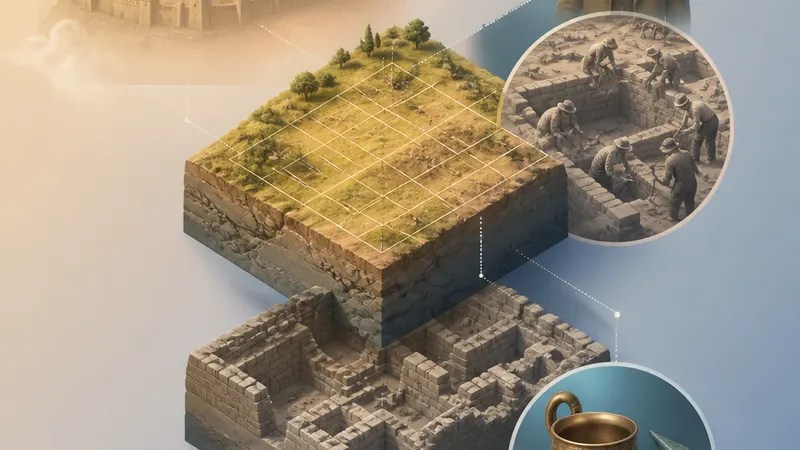
When people hear “archaeology,” they often imagine careful brushes and slow, precise work. Modern archaeology aims for that kind of methodical process because context matters almost as much as the object itself. Context means where something was found, what layer it came from, and what was around it.
That’s why destructive digging is such a problem. If you tear through layers of a site, you don’t just move dirt. You may erase the timeline that helps experts understand which period belonged to which settlement.
This is where Troy archaeology gets especially complicated. Schliemann’s discovery was influential, but the way he dug reportedly removed or disturbed parts of the record. So when you hear that he “found Troy,” it’s worth holding two ideas at once: yes, his work mattered; no, it was not a clean or simple triumph.
So, was Troy real?
Yes — in the sense that there is a real archaeological site identified as Troy. That is the part casual readers should feel confident about based on the source material here.
What remains more complicated is how closely the literary Troy matches the historical city. The source from Storica supports the existence of the site and Schliemann’s role in bringing it to wider attention, but it also shows why the phrase Troy myth and history is still useful. Myth and history are not the same thing, even when they overlap.
So if you’re answering a friend in one sentence, you could say: Troy was real, but the story people tell about finding it leaves out how much of the site was damaged in the process.
What users should know when reading about the ancient Troy site
If you’re skimming articles or social posts about the ancient Troy site, a few filters help:
- “Real city” does not automatically mean every legend detail is confirmed.
- A famous discoverer can be both important and deeply flawed.
- In archaeology, how something is found matters almost as much as what is found.
That last point is probably the most useful takeaway. The Troy story isn’t only about proving an old city existed. It’s also about learning that historical evidence is fragile. Once a layer is destroyed, you usually don’t get it back.
The bigger lesson from Troy excavation
There’s a reason this story still sticks. It captures a very modern problem in an ancient setting: people want clear answers, but the truth is often mixed.
Schliemann helped make Troy feel real to the wider public. At the same time, as Storica reports, his search for proof came with a cost. That doesn’t erase his role. It just means the real story is more complicated than the version that fits neatly into a headline.
And maybe that’s the best way to think about Troy now: not as a myth that became fact overnight, but as a place where legend, evidence, and human error all meet.
FAQs
Was Troy real or just a myth?
Based on the source provided, Troy was real in the sense that there is a real archaeological site connected to it. The mythic stories around Troy are a separate question.
Who found Troy?
The source links Heinrich Schliemann most strongly with finding Troy and with uncovering a gold hoard in 1873.
Why is Schliemann controversial?
According to Storica, he helped uncover Troy but also damaged the site through destructive digging. That makes his legacy important, but also disputed.
Sources
Internal link suggestions
- A beginner’s guide to archaeology and how digs actually work
- Myth vs history: how historians evaluate legendary cities
- Famous discoveries that changed history — and what got lost along the way

