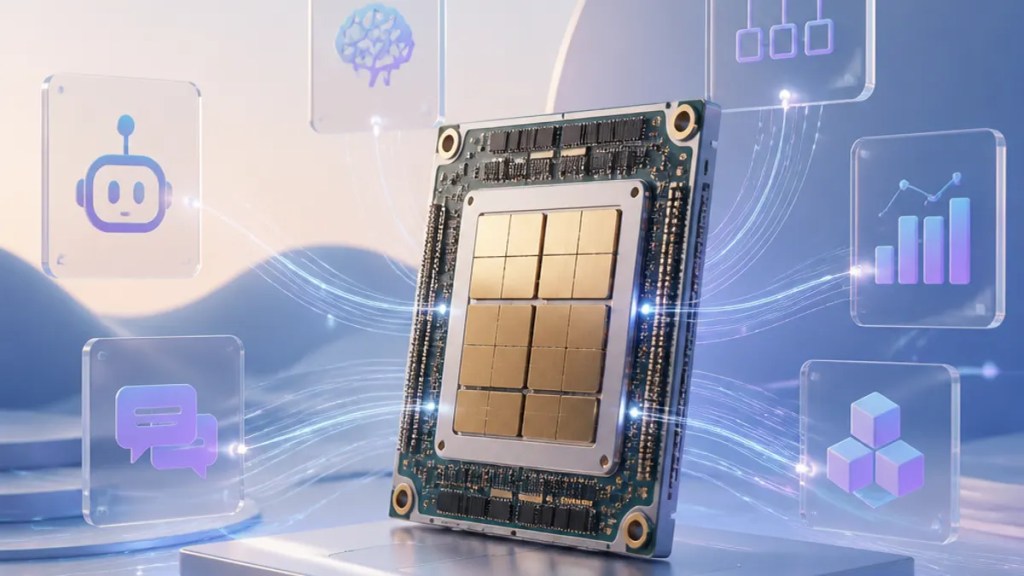
Google’s New TPUs Target the Agentic Era
Google is using Cloud Next 2026 to introduce two new Google TPUs, and the pitch is pretty clear: AI is moving toward “agentic” systems that do more than answer prompts, so the hardware underneath needs to get more specialized too. If you use AI tools at work—or just keep an eye on where Google Cloud is heading—this is one of those infrastructure updates that could quietly shape what AI products feel like next.
According to Google’s announcement, the company is launching two specialized TPUs for the agentic AI era.
Quick Summary
Google says it is launching two new TPU systems at Cloud Next 2026.
A TPU, short for Tensor Processing Unit, is Google’s custom chip for AI workloads. In plain English: these are AI chips built to help train and run machine learning models more efficiently.
What matters here is the split. Rather than one do-everything processor, Google is introducing two specialized options, which suggests the company sees the next phase of AI as varied enough to need different hardware paths.
What Google announced
The core news from Google’s Cloud blog is simple but important: two new Google Cloud TPU offerings are being introduced, named TPU 8T and TPU 8I.
Google frames both around the rise of agentic AI—AI systems designed to take actions, make multi-step decisions, and handle more complex workflows rather than just generate a single answer. That matters because agentic systems often need a mix of capabilities behind the scenes, including training large models and serving them in real time once they’re deployed.
From the source material provided, Google has confirmed the names of the two new TPUs and the broader positioning around the agentic era. The company has not, in the source available here, provided a full public list of specifications, pricing, or broad performance numbers, so it’s worth being careful not to read more into the announcement than Google has actually published.
TPU release date: what’s confirmed
If you’re looking for a precise TPU release date, the source points to the launch happening at Cloud Next ‘26. In other words, the announcement is tied to that event.
What is not clearly confirmed in the provided source is a detailed rollout calendar for general availability. So the safest takeaway is this: Google has announced the hardware now, and broader access timing may depend on how the company stages deployment through Google Cloud.
That distinction matters for businesses. An announcement at a keynote or event often means “introduced now,” while actual customer access can arrive in phases.
Why two TPU models instead of one?
This is where the strategy gets interesting.
Google’s decision to launch two specialized TPUs suggests it sees AI workloads splitting into different categories. Some AI jobs are about building and refining models; others are about running those models quickly and reliably for users. In cloud infrastructure, those are very different demands.
Even without a full spec sheet in the source, the naming and positioning imply that Google wants customers to choose hardware more intentionally depending on the kind of AI system they’re building. For companies working on agentic AI—think assistants that can plan, retrieve information, and act across tools—that specialization could matter more than a generic “faster chip” message.
For everyday users, you probably won’t buy one of these chips or even see one directly. But you may feel the effects later through faster AI services, more capable assistants, or lower costs for companies building on Google Cloud.
TPU features: what users should know right now
The most important TPU features confirmed in the source are not fine-grained technical specs. They’re about purpose.
Google says these new chips are specialized for the agentic era. That tells you a few things:
- Google expects AI workloads to become more complex.
- The company believes custom AI chips still matter in a market crowded with GPU-based infrastructure.
- Google Cloud is trying to give developers and businesses more targeted hardware choices.
If you were hoping for detailed architecture breakdowns, memory figures, or benchmark comparisons, those details are not established in the source set here. So for now, the clearest user-facing takeaway is that Google is tailoring its TPU lineup around how modern AI systems are actually being built and deployed.
Why this matters beyond Google Cloud
There’s a broader industry angle here too.
The AI infrastructure race is no longer just about having “more compute.” It’s increasingly about matching the right chip to the right task. Google has been making that case for years with TPUs, and this latest move sharpens it by tying hardware directly to agentic AI.
That could influence how businesses choose cloud providers, especially if they want to build AI agents that need both responsiveness and scale. It also reinforces Google’s message that its cloud business is not only about models and software, but about the full stack underneath.
So yes, this is a hardware story. But it’s also a story about where AI products may be heading next.
The bottom line
Google’s new TPUs, announced at Cloud Next 2026, are aimed squarely at the next wave of AI systems. The headline is not just that there are new chips. It’s that Google is splitting its TPU strategy into two specialized products—TPU 8T and TPU 8I—for an era where AI is expected to act, not just respond.
For now, that’s the key thing you should know: the company is aligning its hardware roadmap with the rise of agentic systems, even if some of the finer details on availability and deeper feature sets may come later.
FAQs
What are Google TPUs?
Google TPUs are custom processors built by Google for AI and machine learning tasks. They’re designed to help train models and run them efficiently in cloud environments.
What did Google announce at Cloud Next 2026?
Google announced two new TPU products, TPU 8T and TPU 8I, and said they are designed for the agentic AI era, according to Google’s Cloud blog.
When is the TPU release date?
The announcement is tied to Cloud Next ’26, but the provided source does not clearly confirm a full rollout schedule or general availability date for all users.
Sources
Internal link suggestions
- A recent explainer on what TPUs are and how they differ from GPUs
- Coverage of Google Cloud Next 2026 announcements and AI infrastructure news
- A broader article on the rise of agentic AI and what it means for consumers and businesses

